The Only Kind of Prepping Worth Doing

The Only Kind of Prepping Worth Doing

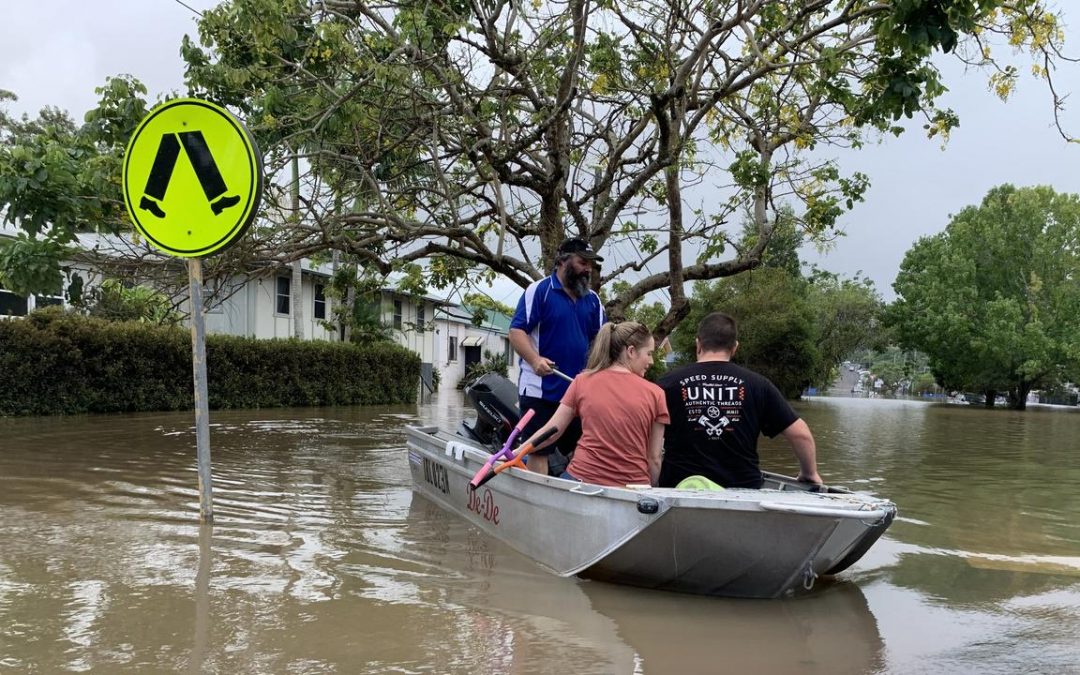
Bushfires in Australia and wildfires in the Pacific Northwest, and everywhere else they are raging out of control, take out plenty of prepper properties, as well as more conventional buildings (not to mention the millions of other lives). The recent floods in northern NSW, outrageous in their extent, must have washed out countless veggie patches, some of which would have been substantial. The days of thinking that individualistic, survivalist forms of prepping, to create climate proof shelter and food sources, are over. 

I’m still growing as much food as i can, but now i know that could all be flooded out tomorrow. I’m still hunting in my local ecosystem for protein, but now i know those same floods make conditions for my chosen sport – spearfishing – completely hopeless. I see that my own humble efforts are part of a bigger picture of trying to become free from the mass markets and their supply chain weaknesses; and i see that none of us can become free of climate chaos. 

    .

We knew ecosystem collapse was going to be non-linear, but now the results are starting to become known. They are not completely random – superstorms will whip up more intensely in certain places, due to ocean currents and prevailing wind patterns, while droughts and heatwaves will become more prominent in some places than others. But regardless of the randomness or predictability of the effects, one thing we can be sure of is that we are about to be as psychologically assaulted as people have ever been. And this time the “we” really is everyone. 

Sure, the 1% and other assorted squillionaires might hold out longer in their bunkers, enjoy whatever media they have pre-recorded and swill whatever goods they have shelved while we bake on the surface above. But eventually, apocalyptic conditions will affect all of us, everywhere, all the time, increasingly. All humans as well as most other animals and complex life forms are going to be as ‘baked in’ as the feedback loops that now ensure that climate action will no longer be enough to mitigate a mass extinction event. 

Given that those exponential graphs still ain’t going nowhere but up and off the charts, i think it is time we got all post-doom and cranked up the volume on our spiritual response to this reality. And by spirit, i simply mean the essence of a thing, the enlivening force, the mysterious energy that explodes into life as the universe, and as consciousness, and incarnates as us sentient beings, intelligent primates, self aware and embodied by some miracle we did nothing to deserve. 

In fact, celebrating this is half my answer. Getting back to thankfulness, appreciating our outrageous fortune, loving life in all its myriad forms while we still can. Recognising that all the work we do for our environment, all our attempts at evolving social justice, every act of compassion is a drop in the ocean of eternity – not producing anything, not changing the direction of the world, just doing good for its own sake.

Surrendering to this is humbling and beautiful. My Zen practice – a prosaic term for breathing in the miracle of presence in every moment – has never been so strong and lasting into the day as it has been since i gave up thinking i was going to change anything except the way someone thinks for a while, the way a child smiles when i am genuine with them, the way a bee flies on when i rescue it from tidal seawater, the way a plant flourishes because i watered it. 

Aside from this deeply personal response, which all of us can make, immediately, and keep doing, there is community. That will be the subject of my next post; how we can work together, in groups of like-minded individuals, for mutual support. I’d like to be doing this more in my local area, but in the meantime i am currently facilitating retreats to help people connect more deeply with nature, for the purposes of therapy and liberation, and i recently enjoyed Jem Bendell and Katie Carr’s Leadership and Communication During Societal Breakdown course. 

These are the most effective prepping activities we could be doing right now. Getting better at living again, for the moment, for the little things, while we can, together and alone. There’ll be plenty of big stuff to attend to, no matter where we live, soon enough. And in the meantime, children still smile when you are kind to them. Even adults do sometimes … 

Please Like, Share and Subscribe if these words meant anything to you.

Opening photo credit: Gillian Tedder


Near Term Human Extinction (NTHE) – let’s start this conversation

Near Term Human Extinction (NTHE) – let’s start this conversation

How then shall we speak of what is to come? It’s time to start talking about Near Term Human Extinction (NTHE). 

It is the most momentous moment of our species, our swansong, the end. No more living or writing for posterity; that vanity is dust. Homer, Virgil, Dante, the older classics from the earliest recorded stories, will be consigned to the winds, along with all other human arts. And with us, so much other animal life, so many ecosystems, entire forests of life, wiped out. Let’s try to chew this down in bite size chunks, because i have had it marinating for a while, and i still can’t figure out how to talk about this in one hit. We’ll get to the nightmare scenario of 450 nuclear reactors popping because we won’t have the time or resources to decommission them safely later. And the new era of industrial flotsam and jetson, as entire cities scour the shore where once clean ocean passed by. Let’s cover that one later too. 

For now, let’s stick with societal breakdown, the need for deep resilience as a minimum standard, the testing of all our mores, no matter how well rehearsed. 

The floods smashing south eastern Queensland and north eastern NSW right now are off the scale. The megafires that threatened my home and torched billions of animal lives a couple of years ago were unknown until recently, too,  Aboriginal Australians even saying they have no story for this scale – a sure sign it has not occurred for tens of thousands of years, for the length of their oral history. 

This isn’t just anthropogenic climate change – this is ecosystem collapse. When the methane burps and so much more of the polar caps slips into the ocean that we see sea level rises in metres, we will know it is coming for good this time. The ocean wants us back and it keeps the lowest elevation real estate on the planet. That’s where we’ll end up. In the Deep. 

Let me know what you think, what you want to talk about, how we’re going to process this together. Are you relieved someone is finally telling this story, even though it is about to end? Frightened, avoidant, carefree, devastated? I’ll add chapters, if you let me know how this conversation might unfold. We’re going to need a level of understanding we’ve rarely displayed before. I want compassion, empathy, spiritual generosity to lead. There’ll be plenty of nastiness to go around, without us adding to it. Let’s go. 

How to Live With Forests

How to Live With Forests

There’s a beautiful tree out back of my place. I love its almost symmetry, the way it fans for the sky, maximising on the available sunlight and growing strong, even as we are still in drought, long term. Since the fires, trees have been getting cut down everywhere up and down the south coast. It’s slash and burn on the the roadsides, as there is an unusual amount of licence granted for those kinds of actions right now. Putting in fire breaks, cutting down trees, clearing out shrubby undergrowth, making areas around houses more safe. 

Newly cleared roadside

Fair enough. I’ve seen examples down backstreets that were lined with dry, scrubby undergrowth, which the locals see as little more than unnecessary fuel left to burn. Some get grumpy about greens stopping them from burning off, some know that’s not right, many admit that regardless of the politics involved, it has also happened because we don’t listen to the Aboriginal knowledge about how to burn country so that it regenerates. We have the option of doing that now, which is why i am working with local elders to see it happen.

But sometimes you sense that some people are also enjoying this. Almost taking revenge on the bush, for being so difficult. Yeah, there’s a lot of it out there, but we’ve seen this summer how vulnerable it is. And we don’t actually have to perpetuate the archetype of the pioneer, always ready, willing and able to tear the bush down to extend the property.

Properties need to be made as safe as possible and traditional owners burnt in small patches to leave cleared spaces too … but geez we love to slash and burn don’t we?

Trees are not the problem, the way we’ve managed them are. A forest is not just a carbon sink and a home to so many animals and plants. It is a place to breathe and a generator of wellness for the entire ecosystem. In physical terms, forests help produce – along with the sea – the oxygenated air we breathe, so perfectly balanced for the sustenance of mammalian and so much other life. And in psychological terms, time spent in forests boosts our mental and emotional health.

One thing I saw, during the NYE fires in Broulee, was that people’s mental state during crisis is paramount to their outcomes. Both in the way they respond in the moment, to needs like getting hoses ready to fight ember attacks; and in the way they come through it, afterwards. There’s a real case for eco-grief work, taking into account people’s personal experiences (even when vicarious) in consideration also of the wider context of the climate crisis. My work with the International Ecopsychology Society is always a heartening reminder that we heal and grow through crisis with nurturing guidance and thankfulness practices.

We need to remember how to live in and with the forests, with love and respect, rather than either logging them relentlessly or leaving them untouched, which leads to dangerous fuel loads. There are many stories of Australian Aboriginal and Torres Strait Islander people having profound layers of ecological wisdom when it comes to maintaining life in the broadest spectrum of ecosystems.

Bruce Pascoe in Dark Emu and Bill Gammage in The Biggest Estate on Earth have reminded us of how we can live within the natural world without compromising the very fabric of life that supports us. Traditional cultures have so often lived in this way.

By contrast, the process of colonisation, fuelled by more developed technologies (of agriculture, war, industry and now digital), is designed to extract wealth from the earth and accumulate it in urban centres. We need to shift away from this culture and back – as well as forwards – to one that respects its home. Traditional people like the Walbanja where I live know how to practice hunting and gathering, tending to Country, cultural burning, harvesting and ensuring future seasons are plentiful. We need to listen to them and learn better how to keep forests and grasslands healthy, how to propagate robust populations of plants and animals into the future, while the forests they live in and with help create rain as well as fresh air. Comparatively, excessive clearing creates drought, then allows more topsoil to run off when floods follow. We’re seeing it again. Let’s listen to the elders on Country, for better results. 

Artwork generously supplied to SCAE by Raymond Carriage

Geoff Berry is CEO of the South Coast NSW Aboriginal Elders Incorporated Association, who create employment for Koori and at-risk youth with rebuilding and regeneration projects. SCAE aim to build culture and communities that respect tradition, and seek to perpetuate the best aspects of Aboriginal and non-Aboriginal cultures, for the good of all, in a modern context. 

*NB: Please give generously to our crowd funding campaign if you would like to see this project financially supported for its work.

The Only Ashes That Matter This Summer

The Only Ashes That Matter This Summer

A new type of seaweed, I thought. Black – I haven’t seen this here before. But it isn’t seaweed, washed up on the beach this morning. It’s ash. We’re 25km south of the fire that has just ravaged over 70,000 hectares of forest between Batemans Bay and Bawley Point, where I first lived when I moved to the coast. I drove 35km through that forest every weekday for 6 months. But the numbers don’t add up. The forest is dead. The buildings are protected, the human homes saved. But the trees are gone and with them the nests, the birds and the insects, the lizards and wombats, the life. And its dust is washed up on the tides, carried away by the ocean, deposited here to let us all be reminded – a great fire is coming and we are all in line. 

At first it looked just like seaweed …

I’ve gotten used to the Shearwater carcasses lining the shoreline by now. But this is new – a colourful parrot, strewn across the beach, and then a magpie. Charred by the fires and thrown into the waters, to be spewed up here by the ocean. We can only imagine the horror of its last moments, its world incinerated by a monstrous explosion of fire, its feathers burning crisp as it crashed into a death spiral and the waves below. 

There have always been fires, like floods and droughts, in Australia. But the ferocity, the intensity, the extent of their devastation is new. This is what scientists warned us about 20 years ago and this is what fire chiefs reiterate now. Now we reap what we sow. Centuries of farming for what we could get, on this land, and millennia of profiteering across the globe, behind it. The relentless logic of capitalism, built out of the greed that drove colonisation since the age of agriculture began, turbo boosted by the machine age of industrialisation and now the exponential skywards march of the digital age. Straight up, go the growth figures; and straight back down, they will come. This is timeless wisdom, dressed up as prediction, made easy by the stupidity of our ‘leaders’. 

I still swim in the salty sea waters I love. The ash isn’t too bad once you’re in. The scent is off-putting, though; not as bad as burnt hair, but a whiff of death is in the air for sure. The sun glows an eery red but the surfers are still out too, looking for a wave. I still go to work. Life goes on. But it’s changing, this year, and it’s going to keep on getting worse while we fail to face, let alone act on, the realities of anthropogenic climate change. The crisis is washing up on our shores, just as it is lapping at the feet of the Pacific Islanders, melting glaciers, extending deserts and torching even rainforests. While our ignorant PM waffles on about the cricket and anything but the emergency, the only ashes that matter this summer are already here. 

NB: Please Subscribe (enter email top right) to get updates on facing the end of the world as we know it with love and rage, acceptance and lyricism, and a scientifically literate and embodied spirituality.

Migration Fail: meditation upon a collapsing planet

Migration Fail: meditation upon a collapsing planet

The first bird turned out to be alive, still. Only just though. It was so weak i could approach, nudge, and note its feeble movement in protest as my dog backed away from the scene.

The next one was certainly dead, turned up so that you could see its guts had been eaten out. Then the next, and the next. These were Shearwaters, which had failed their migration and fallen upon the beach, only to have whatever small amount of nutrition that was left in their stomach eaten out by whatever sea creature or other bird could get at it.

I’ve only lived on this coast for 4 years, so saying i haven’t seen this before doesn’t amount to much. But something stopped me in my tracks; more than just the individual deaths, more than the mounting evidence of the current and ongoing extinction event that is seeing the end of so many species we can’t even keep count. My favourite animal of all, the Monarch Butterfly, have lost over 80% of their population over recent years (see here).

I later found this report, about the Shearwaters not arriving at their usual destination in Victoria. It was updated only days ago, here. What’s happening is part of a larger pattern. Climate science makes this clear and calling it a Mass Extinction Event seems accurate (although our political leader’s self-serving inaction makes the term ‘extermination‘ more accurate, as suggested by Jeff Sparrow recently). Professor John Arnould cautions us not to panic abut the failed migration this year. But it’s just another sign. They’re adding up.

We’re going to need to get better at dealing with death and destruction as the climate emergency rains its blows down upon us over the coming months, years and decades. In many places, for many creatures, the chaos has already taken its toll. Some people think the planet would be better off without us, but right now, we’re holding the keys to the nuclear reactors and so many other places that could make everything much worse for much longer if we can’t maintain the little control we have left over the damage we are doing every day.

But it will be the grief that undoes us. The countless moments of loss and trauma as we watch our loved ones fall upon the earth, their stomachs empty as the crops fail; or the shock as our communities burn to ashes on the wind in the next horrific fire; or the anguish as we are swept away on hitherto unimaginably fierce storms … the actual details of our undoing will be sickening, so that we cannot celebrate the end of the anthropocene with a clear conscience. We’re going to have to get better at grieving loss, because just as it came for these few birds on my local shore, it is coming for all of us, whether we act now to make our fates less harrowing or not.